Friday, 7 March 2014

SUPERFOOD SALAD WITH BLACK RICE, BUTTERNUT SQUASH, SWEET POTATO, CRANBERRIES, GOJI BERRIES, SUNFLOWER & PUMPKIN SEEDS


I'm always looking for recipes that can be made at the beginning of the week, but also kept and enjoyed for lunches over the next few days. Some of my favourites are my Pecan-Crusted Basa or Crustless Quiche with Spinach & Sausage. Both are easily transportable and healthy - just add a side of veggies and you have a complete meal!

Grains are also a great option.  Take an otherwise plain grain (rice, bulgur, quinoa) and jazz it up any way you like. Depending on the season, you can choose fresh, vibrant vegetables like green beans and tomatoes, or more hearty ones, like sweet potatoes and beets. Add some fresh herbs, lemon juice, and your favourite oil (have you tried avocado oil?), and you've got a delicious, nutrient-dense meal on the go.

I came across the recipe for this superfood salad ages ago, but only recently did I get around to trying it out. Not only is it a recipe that you can make early in the week and store for lunch the next day, but it meets both of my main criteria when looking for new recipes: it's easy to make and it's superfood qualities make it super tasty! I like efficient recipes that don't require a lot of hassle and that use ingredients I already have around the house or, that if I do have to purchase new, can use over and over again in many recipes to come. This recipe is just that - simple, easy to make - and, of course, delicious!

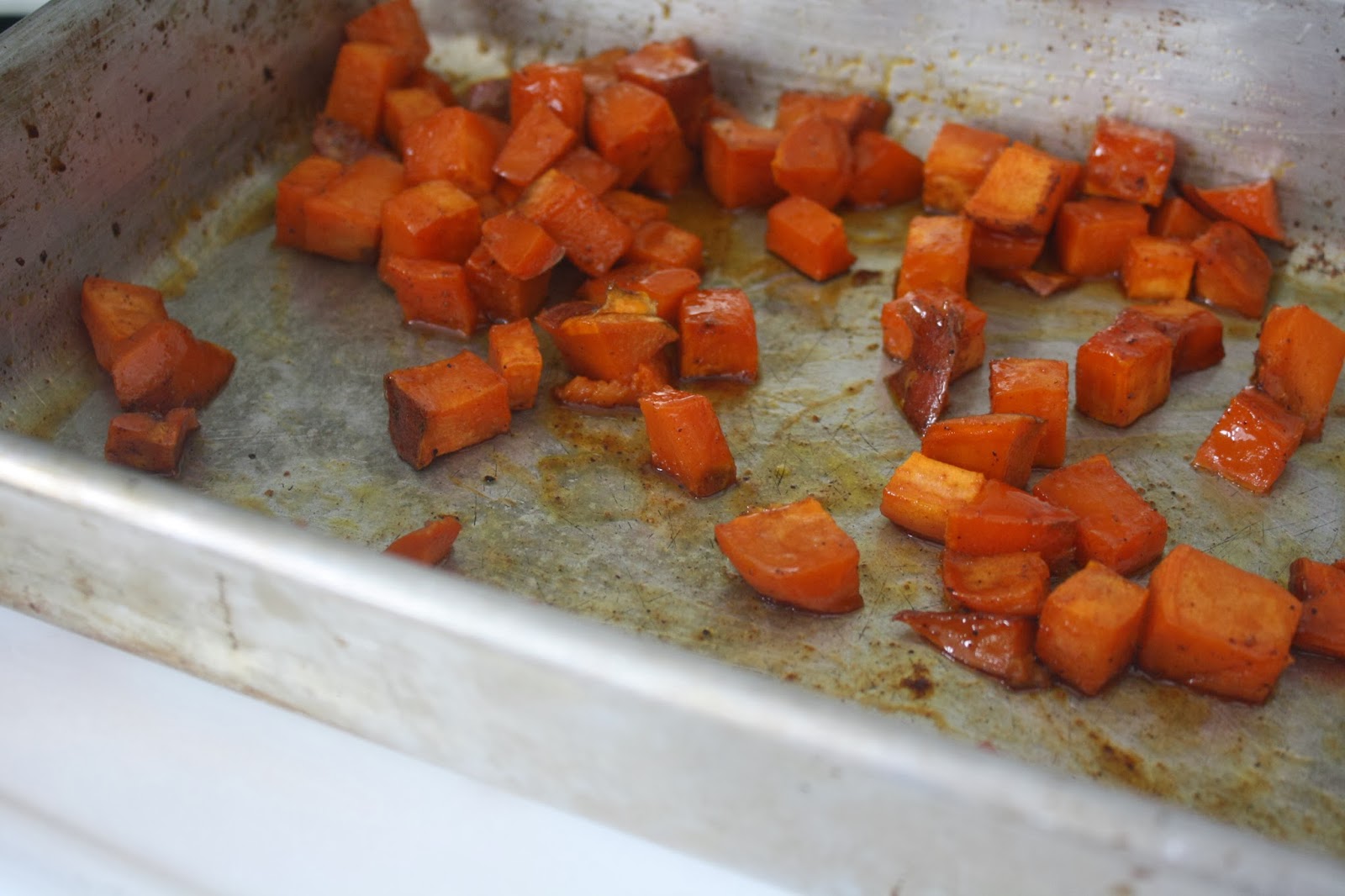
This superfood salad packs flavour, with roasted butternut squash and sweet potatoes glazed in honey and nutmeg. Add in some sweet and tangy cranberries, chewy goji berries, plus the crunch of sunflower and pumpkin seeds? This salad is action-packed - full of flavour and nutrition. You really can't go wrong. Thanks to Del Sole for the fabulous recipe!


DISCLAIMER: I am not a nutritionist, physician, or any kind of health professional. Everything that you find on my blog is based on my own knowledge and opinion. If you require specific health and fitness advice, please seek a qualified health professional.

Monday, 24 February 2014

EGGPLANT ROLLATINI

This might be one of the best dishes I've ever made.


If you're looking for something to jazz up your menu this week, something that's simpler than it looks to prepare, that tastes amazing, and that makes a healthy dinner and lunch, look no further. It's Eggplant Rollatini.

The original recipe from Food Fitness Fresh Air is completely vegan, but I tweeked it a bit to include ground turkey, substituted the bulgur wheat for quinoa, and omitted the bread crumbs. Simply put, it's an easy recipe to which you can make alterations and it will still taste delicious. Here's my version:

Eggplant Rollatini
adapted from Food Fitness Fresh Air

2 large eggplants, thinly sliced lengthwise (1/4-inch thick)
1/2 lb. extra lean ground turkey
1 large clove garlic, minced
1 lemon, juice and zest
1 cup cooked quinoa
2 cups spinach, chopped
1/2 cup nutritional yeast
1 tsp. salt
1 tsp. red chili pepper flakes
2 tbsp. fresh basil
2 tsp. dried oregano
pepper, to taste
olive oil, for brushing
2 cups marinara sauce

1. Preheat oven to 400 degrees F.

2. Lightly brush eggplant slices with olive oil and sprinkle with salt and pepper. Place them on a hot grill pan and cook until each side is lightly browned. Remove and set aside.

3. In a the same pan, cook ground turkey until browned. Set aside.

4. In a large bowl, combine ground turkey, garlic, lemon juice and zest, quinoa, spinach, nutritional yeast, salt, chili flakes, and herbs. Season with pepper, to taste.

5. Line a large baking pan with aluminum foil. Place a slice of eggplant on a cutting board. Place a large spoonful of the turkey-quinoa mixture in the centre and then fold the two outer edges towards each other so that one just slightly overlaps the other. Don't be afraid to overstuff these, as the spinach will wilt down and any rips or tears will be disguised by the sauce later on. Repeat with each slice of eggplant, placing each roll side by side into the baking pan.

6. Cover with sauce. Bake for 30 minutes or until bubbling. Cool slightly, and serve.

Try This: Another yummy filling might include butternut squash, or wild rice, or cremini mushrooms. You can make your version gluten-free, dairy-free, vegetarian, or vegan. This is a great dish if you're not sure what to make but have a few things laying around your fridge - the possibilities are endless!

image via food fitness fresh air


DISCLAIMER: I am not a nutritionist, physician, or any kind of health professional. Everything that you find on my blog is based on my own knowledge and opinion. If you require specific health and fitness advice, please seek a qualified health professional.
Wednesday, 19 February 2014

WHAT'S IN MY MEDICINE CABINET?


It's that time of year! You know, when everyone gives each other lovely packages of the cold and flu? Fortunately, I've received no such gifts this winter - and I'd like to keep it that way! In order to do so, however, it's important to always be prepared.

Let's face it, when you're achy all over and can't get a grip on the throbbing pain in your head or put a stop to the flow of mucus from your nose, the last thing you want to have to do is run to the drug store. Unless you're like my friend G, who, when he gets sick with the flu opts out of the usual soup broth diet and makes himself a sweet potato gratin for dinner. Sigh.

Okay, while I'm not recreating Jamie Oliver recipes in the kitchen in preparation for cold and flu season (or during), I do like to keep a well-stocked medicine cabinet in an effort to ward off those pesky bugs.

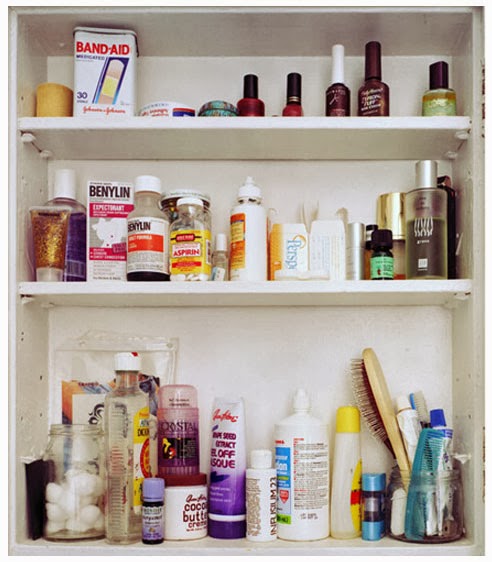
So, without further adieu, here's a look into my cold season emergency kit:

1. Echinacea - at the first sign of any kind of cold or flu (sniffle, cough, sore throat), I start by taking echinacea. It boosts the immune system, which is important during the sick season, and extra important for anyone with an auto-immune disorder.

2. Vitamin C - in addition to echinacea, I also like to boost my immune system with loads of vitamin C. I'll buy an extra bag of oranges (grapefruit works, too!), and go to town. While it's great if you're able to enjoy these foods and their health benefits all year around, it's not really the case in the middle of a cold Canadian winter - or any time in Canada, for that matter. Whether you choose to take a supplement or bask in the goodness of fruits and vegetables naturally loaded with vitamin C, get it.

3. Oil of Oregano - this stuff is disgusting. I'll only reach for oil of oregano if I feel an extra strong cold coming on, or I've already caught the bug and I'm trying to get rid of it. Some people will take a few drops of oil of oregano under their tongue. I prefer to place 4 drops in a large glass of water and slosh it back. Easy on the gulps, though. The more you gulp, the more you'll be burping. The more you burp, the more oregano after-taste you'll experience. Proceed with caution. For more information about how oil of oregano works, see here.

4. Chicken Soup - it's really important when we're sick that we receive proper nutrition. Ice cream and Jell-O may seem like great solutions to a sore throat, but an overload of sugar (and dairy, weird additives...) is only going to suppress the immune system and make it more difficult to fight infection. Plus, it's a waste of space and calories. Instead, get the most bang for your buck with nutritionally-dense foods. One of my favourite things to have when I'm sick (or on the verge of getting sick) is chicken soup - find my recipe here! Something like chicken soup is great because it's warm, soothing (especially when you add garlic and ginger), and hopefully packed full of great nutrition from vegetables and lean chicken. If you're a vegetarian, a vegetable soup will do just fine. The important part is that you load up on vegetables, because these will be gentle enough for you to digest, and the alkalizing effect they have on the body will help in combatting any virus or infection, much better than any friends of ice cream or Jell-O would.

5. Lemon Water - first, I'm incredibly impressed by how many of my friends actually drink lemon water first thing in the morning. Lemon water is an excellent natural detoxifier in that it helps to cleanse the liver of toxins. It's a great way to start the day and to clean up your digestive system. Just add the juice of 1/2 lemon to a cup of hot water and enjoy! For an extra health boost, add 1 tsp. of fresh ginger.

6. Scarf - I know, this is a weird one, but ever since my eldest brother said that he wore a scarf to bed when he was sick once, I just had to give it a shot. Now several years later, at first signs of a sore throat, I'll wrap my neck in soft scarf and hit the hay. I swear, it works! In fact, I have a felt scarf right next to my bed right now for that purpose. Preparation is key, folks.

What are your go-to remedies during cold and flu season?

image via pinterest


DISCLAIMER: I am not a nutritionist, physician, or any kind of health professional. Everything that you find on my blog is based on my own knowledge and opinion. If you require specific health and fitness advice, please seek a qualified health professional.

Thursday, 13 February 2014

FAKE IT & MAKE IT (WITH CHEESE, PLEASE)

Recently, I had a couple of requests for my 'fake' macaroni and cheese recipe. I call it 'fake,' because it doesn't have any cheese. In fact, it doesn't have any dairy at all. It's a vegan recipe that's super satisfying and easy to make - you'll wonder why you never tried it sooner!

But first, the secret to this cheesy-tasting pasta dish without the cheese. It's something called nutritional yeast, and it's magical and delicious.

It's not cheese, yet it tastes like cheese. 

Everyone who knows me knows that I love love love air popped popcorn. If you knew me years ago, you also know that I used to suffocate my popcorn with another fake cheese product. That white cheddar cheese powder you can purchase in the popcorn/chip/junk food aisle at your local grocery store? That stuff is addicting, but it's also full of weird gunk that no one should really be putting in their body. Then there came the time I discovered nutritional yeast, and that it tasted like cheese! Upon this discovery, I ditched the fake white powdery junk and now always opt for the less processed, healthier alternative (albeit still 'fake' cheese). After a toss of coconut oil and salt, I'll sprinkle some nutritional yeast on my popcorn and voilĂ , delish!


Okay, so nutritional yeast tastes like cheese. It's delicious. You can use it on your popcorn, blah blah blah. But, what about its great health benefits?

1. It's a great source of vitamin B-12. Apparently that's what gives nutritional yeast its yellow colour, but it's also what helps to maintain our energy levels, support mental stability, and reduce the risk of anemia, amongst other fun things.

2. It's high in protein. There's something like 18 amino acids in nutritional yeast, and 6 grams of protein in 2 tablespoons.

3. It's gluten-free. For all those scared of the little gluten monster, you can enjoy nutritional yeast with a happy belly to boot.

4. It's salt-free, too. Ditch the salt. Sprinkle this stuff on vegetables, pasta, or my personal favourite, popcorn (!) for a tasty and guilt-free seasoning.

5. And, there's a bunch of other vitamins and minerals. Such as folic acid, biotin, iron, magnesium, and zinc.

But more importantly, on to the mac 'n' cheeeeese.

You'll probably be surprised to learn that my cheesy sauce recipe is actually from the package of Bob's Red Mill nutritional yeast flakes that I purchased a while back. Though, I have made a few changes, like replacing butter with coconut oil, making this recipe a truly dairy-free (& vegan) alternative. I also used brown rice flour instead of white flour, so that when we pair the sauce with some brown rice pasta, this dish is gluten-free, too. Serve it to friends and family without telling them it's vegan and they'll never know the difference.

Vegan Macaroni & Cheese
with yummy sauce adapted from Bob's Red Mill

1 tsp. mustard
1/4 cup coconut oil
2 cups cold water
1 tsp. sea salt
1/2 cup brown rice flour
1/2 cup nutritional yeast
your favourite pasta, I like rice pasta

1. In a saucepan, whisk together nutritional yeast, flour, and salt.

2. Place pan over medium heat and whisk in water. Continuing whisking as sauce thickens, bring to a rolling boil, reduce heat, cook 1 minute, and remove from heat.

3. Whisk in coconut oil and mustard. Sauce will thicken as it cools, but will thin down when heated.

4. Prepare pasta according to package directions. Once cooked to your liking, strain. Gently incorporate pasta to your saucepan with cheese sauce, tossing to evenly coat. Serve and enjoy!

Makes 8 servings.

Try This: When I was a kid, my mom used to put green peas and canned tuna in our macaroni and cheese - I guess so that there was some kind of nutritional value, because let's face it, our macaroni and cheese came in a box and was labelled as dinner made by Mr. Kraft himself. However, to this day, I still like to toss in some peas and tuna, for ol' times sake. Plus, it's really, truly delicious. Any other ways you like to spice up your macaroni and cheese?

info and image via just good energy and healthy happy life 


DISCLAIMER: I am not a nutritionist, physician, or any kind of health professional. Everything that you find on my blog is based on my own knowledge and opinion. If you require specific health and fitness advice, please seek a qualified health professional.

Monday, 3 February 2014

LESSONS LEARNED '13


2013 was a bit of stressful year.

Okay, it was the most stressful year of my adult life. There, I said it. From trouble in paradise to the serious illness of loved ones, to the death of multiple family members within weeks of one another...and to work stress, which quickly led to financial stress. In the end, I'm screaming into pillows while I experience yet another mini life crisis, just the way Torontonians seem to freak out every year when it snows for the first time. I really just have to calm the heck down. It's just snow, not acid.

But, there comes a time when we realize just how dramatic we've been (and, indeed, how lucky we are). It is then that we must collect ourselves and (re)learn to appreciate everything that we have. To be grateful for all that those troubles in paradise have taught us, to be humbled by the fortitude of those dear to us, and to be grateful for everyday we have to live and breathe (as hokey pokey as that might sound).

As we enter the new month of February (I like to ease into my past reflections and new year's resolutions...), here are the top three lessons from 2013 that I have learned and relearned about gratitude, the relationship between self-care and caring for others, and living in the now.

Appreciate the simpler things, like time spent with loved ones (and your cat).
Whether or not you live in a city, so many of us are part of this race. We're trying to get ahead and we're moving so fast, we've lost any and all sense of direction. We're ambitious, but we're greedy. We've lost any and all sense of gratitude. It's times like these when we need to stop and appreciate the simpler things. Take a breath, take a walk. Reconnect with old friends, get to know new friends. Find gratitude in the simpler things: a good meal shared with family, your ability to conquer that 5-mile race for which you've been training, or being able to sleep in on the weekends.

Take care of yourself and you'll take care of others.
We like to help others. So much so, in fact, that we often neglect ourselves. When we fail to take care of ourselves, however, we can only make so much of an impact in helping others. Whether it's your health, your career, or your personal relationships, it can be just as valuable to satisfy your own needs as it is to satisfy the needs of others. After all, what good are you to those around you if your health is suffering, your professional life is wavering, or your personal relationships are in shambles? Are you one who criticizes others before conquering your own challenges? Find the time to take care of yourself, and you might just find that you're also able to make a world of difference in the lives of others.

Let go of the past, worry less about the future.
It's not that we want to forget the past, but more of us need to learn to move on from the past. Dwelling on the past can be toxic. It serves no purpose in the present, except to be remembered. Living in the past includes holding grudges. It includes using past experiences as excuses for current actions or experiences. Discover ways in which you can live in and appreciate the present. Unplug from your smartphone (this one totally applies to me!) and immerse yourself in the present with activities such as exercise, spending quality time with family or friends, unguided walks in nature, or if you can dig it, meditation. Particularly for those of us who have experienced traumatic events, it can take a lot of courage and maturity to move forward from the past. But, that's not to say it can't be done.

What lessons did you take away from 2013 and in what ways are you looking to improve in the upcoming year?

image via some notes on napkins


DISCLAIMER: I am not a nutritionist, physician, or any kind of health professional. Everything that you find on my blog is based on my own knowledge and opinion. If you require specific health and fitness advice, please seek a qualified health professional.

Thursday, 9 January 2014

WE'RE BAAAAACK (+ CELEBRATORY COOKIES)

Well, that was a hiatus if I ever saw one.

The past few several months have been very hectic. From work to my personal life, I've been on a roller coaster...and not one of those roller coasters where you just go up and come right back down, but one that has many loops and seems to last forever until you feel like you're going to puke your guts out (but in the end, you're on your feet again and your lunch is still intact, woo!).

While I won't bore you with the gritty details of these ups and downs (that's another post for another day, possibly another blog), let's just say I got "busy with life." Don't we all? 

Excuses aside, I'm eager to return to the blogosphere - to share with you my ideas and recipes, and to help answer your questions and contribute to your discussions. After all, it's all of you who keep me writing.

What better way to kick things off than with a celebratory recipe? Why, a celebratory cookie recipe, of course.


There's not a whole lot to say about these cookies. Just try one and you'll see what I'm talking about. Besides containing zero gluten, dairy, and eggs (for all those allergy-ridden friends in your life), they're out-of-this-world chocolate-y and have a great cookie consistency to boot. Don't thank me, though. It's one of my favourite recipes by Erin McKenna of Babycakes NYC, the popular vegan and (mostly) gluten-free bakery (you can see my original blog post about this baking beauty and my visit to her bakery in NYC here).

These cookies were at the top of my list of holiday baking this year, and got rave reviews across the board. From my foodie friends to close family members (and hardest critics), they received two thumbs waaaay up. Heck, those who tried them wouldn't even know they were vegan and gluten-free had I never told them.

They're that good.

Double Chocolate Chip Cookies 
adapted from Babycakes NYC

1 cup coconut oil
1 1/4 cups coconut sugar
1/3 cup unsweetened applesauce
1 tsp. sea salt
2 tbsp. vanilla extract
1 1/2 cups all-purpose gluten-free flour blend
1/4 cup flax meal
1/2 cup cocoa powder
1 tsp. baking soda
1 1/2 tsp. xantham gum
1 cup vegan chocolate chips, these are my favourite

1. Preheat oven to 325 degrees F. Line baking sheets with parchment paper and set aside.

2. In a medium bowl, mix together the oil, sugar, applesauce, salt, vanilla, and cocoa powder. In a separate bowl, whisk together the flour, flax meal, baking soda, and xantham gum. Using a rubber spatula, carefully push the dry ingredients into the wet ingredients and combine until dough is formed. With the same spatula, gently fold in the chocolate chips just until they are evenly distributed throughout the dough.

3. Scoop heaping teaspoonfuls of the dough, roll into balls and place on prepared baking sheets. Space the portions 1-inch apart. Gently press each with the heel of your hand to help them spread. Bake the cookies on the centre rack of the oven for 14 minutes, rotating the trays 180 degrees after 9 minutes. The cookies will be crispy on the edges and soft in the centre. Remove from the oven.

4. Let cookies stand 10 minutes. They're best served warm, but to save them use a spatula to transfer the cookies to a wire rack and cool completely before covering. Place in an airtight container and store at room temperature for up to 3 days.

Or just share and devour immediately!

Makes 3 dozen cookies.

Stay tuned for updates, as Live Free From undergoes some exciting changes!

image via babycakes nyc


DISCLAIMER: I am not a nutritionist, physician, or any kind of health professional. Everything that you find on my blog is based on my own knowledge and opinion. If you require specific health and fitness advice, please seek a qualified health professional.

Monday, 10 June 2013

IN CONCLUSION

To (finally) conclude my Paleo Confessions series, I wanted to revisit each of my reasons for abandoning a strictly Paleolithic diet with a  few final points final rant.


Reason 1. Nutrition: Nothing is perfect, including legumes and their anti-nutrients. Apparently neither is brown rice, despite what we've been told about it's health benefits. But, what about white rice? It's no better? Each food has its own nutritional qualities that make it good or bad or healthy or less healthy, and that's okay. Nothing is perfect. And, not only is this true for different types of foods, but also specific diets. Who is to say that the Paleo diet is perfect? What about vegan, vegetarian, gluten-free, dairy-free, low-calories diets? Nothing is perfect (!), and that's why we have to find what works for us, as individuals.

While we might be able to analyse the nutritional content of specific foods and in doing so, learn which foods may or may not be healthier for general consumption, nutritional needs are personal. Just because Paleo advocates ban beans for their anti-nutrients and even though nutrition professionals advise of a Paleo diet for those living with an auto-immune disease, doesn't necessarily mean that I need to ditch legumes and only eat meat. What works for that guy isn't necessarily going to work for this guy. By the way, soaking legumes (and cooking them, for that matter) helps to eliminate anti-nutrients. And, because there is no single food with absolute perfect nutritional qualities that we can therefore consume only this food in order for our health to flourish (at least, I don't think so?), we must find a balance between many different kinds of foods.

Nothing is perfect and no two diets are the same - discover your own unique nutritional map.

Reason 2. Variety: I love Meatless Mondays (and other days when I declare vegetarianism). My argument: the Paleo diet lacks variety, and including plant-based proteins in your diet offers more options. For me, this is completely true. However: (1) the same could be said of other diets, and (2) there are ways to get creative in the kitchen (there's a plethora of Paleo diet blogs nowadays). But, my reasoning also has to do with affordability and convenience of plant-based options (see Reason 3: Sustainability).

Ugh. Let's just cut to the chase. I've reintegrated non-Paleo foods back into my diet, primarily gluten-free whole grains, such as brown rice and quinoa, and plant-based proteins, like beans and the occasional tofu. And, if you're wondering about what meals I like to enjoy post-Whole30 / post-Paleo attempt n, it includes a wide variety of foods, many of which are plant-based proteins. My go-to breakfast right now is either sweet potato hash with garlic black beans and eggs or quinoa sautéed with kale and shallots with a poached or fried egg. I usually have some kind of fish later in the day, usually tilapia, salmon, or shrimp. And, for one meal a day, I'll enjoy either chicken, some lean pork, or even a hamburger (that was yesterday). But, there's nothing wrong with a bowl of quinoa salad for an afternoon snack or even dinner, so I've invested in some of my favourite good-quality whole grains and plant-based proteins for delicious snacks and meals all week long.

It's about eating fresh, whole foods, and a little bit of a lot.

Reason 3. Sustainability: Animals are expensive.
Sure, you could argue that a vegetarian, vegan, raw, or any other diet is also expensive. So, for me, it's about finding that balance (also see Reason 2: Variety). Because I care so much about what goes into my body, a large part of my weekly expenditure is on food. And, while I don't buy organic produce all the time (more on this in a later post), I do try to purchase higher quality meat, fish, poultry, eggs, and dairy products. These products are obviously more expensive and so I like to supplement purchasing animal protein sometimes with foods containing plant-based proteins such as beans, lentils, quinoa, wild rice, and the occasional brick of tofu. Especially when purchased in bulk, these foods cost a small fraction of what many grass-fed, free-range animal products do. Right now, this is what suits me best.

Prioritize your health! Spend more money on higher quality, healthful foods now  rather than medical bills later.

Reason 4. Enjoyment: Everything in moderation (including chocolate).
This point coincides well with the idea that nothing is perfect. From beans and chocolate, to the Paleo diet and my diet, your diet, nothing is perfect! For me, that nothing is perfect and that we should enjoy a little of a lot of things translates to making the healthiest choices possible. Of course, this is going to vary, whether I'm living my day-to-day life or I'm living in Italy for three weeks - I'm not, by the way...but you can understand what I'm getting at. In my everyday life, I strive to enjoy whole, nutrient-dense foods, the foods that I'll truly get the most bang for my buck, because they're nutritious and delicious (sometimes this is Paleo, sometimes not). If and when I am in Italy for three weeks, I'll still strive for quality foods made with whole, fresh ingredients, and if that includes an extra scoop of gelato, so be it. 

Balance. For me, it's about making the healthiest choices given my circumstances, all while enjoying life, too - and now that's just common sense.

...

Heck, maybe my biggest issue is putting a label on it. When someone says they "eat Paleo," I assume that means no grains, no legumes, no dairy, no sugar, and no alcohol. Later, I'll learn that they consume sweeteners on a regular basis ("natural" sweeteners, but sweeteners nonetheless), certain grains everyday, and peanut butter each morning. I know, I know. They could be following the 80-20 rule: 80 per cent of the time, they're Paleo; 20 per cent of the time, they're not. But, if you're going to label your diet, then you should follow that diet. Otherwise, just eat your diet. Perhaps this is just the obsessive-compulsive in me. As soon as I realized I was consuming non-Paleo foods even 20 per cent of the time, I no longer deemed my diet Paleo.

There are certainly parts of the Paleo diet that I agree with, that I benefit from, and that I would even recommend for some (for instance, I think we could all do with a little less gluten and a lot less sugar). That being said, choosing what foods to eat or which diet to follow really comes down to your own nutritional needs. And once again, that's why it's so important to find what works for you. You don't have to follow any one diet. It's about trying different diets and tweaking them to suit your needs. My takeaway from trying Paleo is:

a. don't eat processed foods
b. eat grass-fed, organic, high quality animal protein

But, don't get caught up in all of the restrictions (of any diet!). If you can eat dairy, grab a bowl of yoghurt. If you're not allergic to peanuts, happy day!

Strive to become your own personal health guru and to figure out what is required for your optimal health and function. Find a diet and lifestyle that is nutritious, includes variety, is sustainable, and most importantly, that you can enjoy. Do that, and you can label it whatever you want.

image via mostly green


DISCLAIMER: I am not a nutritionist, physician, or any kind of health professional. Everything that you find on my blog is based on my own knowledge and opinion. If you require specific health and fitness advice, please seek a qualified health professional.
Monday, 27 May 2013

PALEO CONFESSIONS: ENJOYMENT


Everything in moderation (including chocolate). It's something I tell everyone who ever asks me either (1) what kind of diet I follow, or (2) what diet advice might I recommend for them. Not only is this general rule of thumb something that everyone can follow, but it leaves wiggle room for slip-ups and somersaults off of whatever diet bandwagon we're riding. For me, this translates to having a little bit of this or that without any guilt. It's about enjoyment.

Sure, there are still foods that in my everyday life I will avoid like the plague. But sometimes, you've just got to say, "when in Rome..." The Paleo diet restricts a lot of foods. I love food and food is a big part of my life, and so I want to be able to enjoy it as more than just fuel.

It's all about moderation.

But, there's a problem with this word, 'moderation.' The problem is that most people (at least amongst those who follow a typical Western diet) don't understand what 'moderation' means. This problem is in large part due to the fact that we aren't properly educated about ideas such as these. Or, perhaps we are misled, as we're served massive portions at restaurants. Either way, we're confused. You're confused, I'm confused.

We're constantly bombarded with nutritional advice and information. We don't know what's the right side up. Plus, we're encountering this information at such a rapid pace that we aren't able to digest the right things - figuratively and literally, we don't have the knowledge to understand what sources of information are trustworthy, what information is valid or adequate, and what foods we should be consuming. As a result, we make choices that might not be the healthiest. The truth is, however, a lot of us don't know any better.

It's one thing to make a conscious decision to consume something that we know and understand isn't the best or healthiest choice. It's an entirely other thing, however, to consume these same foods without a proper understanding of what we are eating. I'm not suggesting that you learn anything and everything about diet and nutrition, but I am recommending that more of us take it upon ourselves to make more conscious decisions in our everyday well-being.

In regards to understanding moderation, I do believe that like our individual biology, this is unique to each and every person. But again, it's necessary that we realize what moderation in diet (and our health overall) truly means to us as individuals. I know what moderate means for me, and I know when I have crossed the line of moderation.

For me, the notion of "everything is moderation" also reflects the idea that no food is perfect, and too much of anything is too much. Period. After all, there's such a thing as too much water (although, I can wager that most of us don't drink enough of it, including myself).

A little of most things is fine.

The more I talk to people about diet and nutrition, the more I realize how little the average person knows about these topics, about their own personal diet and nutrition. It's appalling and kind of really terrifying.

That being said, the goal is not for all of us to follow a single diet. The goal is for each and every one of us to find what works for us as individuals. Educate yourself, read a lot, become your own personal health guru, and find what works for you.

What's your 'moderation'? 

image via eat your books


DISCLAIMER: I am not a nutritionist, physician, or any kind of health professional. Everything that you find on my blog is based on my own knowledge and opinion. If you require specific health and fitness advice, please seek a qualified health professional.

Wednesday, 17 April 2013

PALEO CONFESSIONS: SUSTAINABILITY

Here's reason #3 for why I'm not (just) Paleo:

Animals are expensive. From my pet cat to a pasture of cows, animals can be costly buggers. For a glossy coat and a happy digestive tract, Zoey eats quality cat food. Cha-ching! After she's consumed all of her food, she needs somewhere to dispose of it. Cha-ching! Oh, and don't get me started on her constant shedding. She costs time spent cleaning just from the amount of fur she leaves laying on the couch, on our clothes, on our clothes after we've sat on the couch. Cha-ching!

As for those cows, they can be costly, too. Sure, you can find inexpensive meat at your local grocery store, but what kind of meat is it if it's from animals that lived in cramped pens surrounded by their own faeces while feasting on processed grains and being injected with steroids and hormones to prevent them from getting "sick"? Mm probably the inexpensive kind that also costs very little to produce. Do you really want to be consuming that meat?


Okay, so choose the higher quality meat that's grass-fed, free-range, free-pasture, and free of steroids and hormones, and you're looking at a much heftier price tag. Don't get me wrong, I'd rather pay more for meat that I can feel good about, physically and ethically, but it can be costly. That said, in order to achieve adequate protein intake within my budget, I like to supplement cuts of meat with tofu, nuts, hemp, quinoa, and the occasional bean or two. While some of these foods (ie. nuts, hemp, and quinoa) might seem more expensive to some, a little goes a long way. A serving of any of these foods doesn't need to cost a lot. And, while the same goes for that higher quality meat, it can still cost more than many of these plant-based options.

The Paleo diet can be very expensive if taken to its extreme - that means grass-fed, free-range, free-pasture, and generally, healthier meat (and perhaps more importantly, healthier animal fat). The accessibility to such product at an affordable price is much harder to come by within an urban centre. My parents live in a smaller town and get most of their meat from friends with a farm of their own. They know exactly where their meat is coming from and can therefore trust the quality of that meat. For someone like myself, who lives in the city, the Paleo diet remains costly. That said, by including some plant-based proteins in my diet, I can now afford a little of the best kind of animal protein. Here, it's quality over quantity.

Learn why else I don't just do Paleo here and here, and stay tuned for my Paleo Confessions conclusion!

image via pinterest


DISCLAIMER: I am not a nutritionist, physician, or any kind of health professional. Everything that you find on my blog is based on my own knowledge and opinion. If you require specific health and fitness advice, please seek a qualified health professional.

Wednesday, 10 April 2013

PALEO CONFESSIONS: VARIETY

I love Meatless Mondays (and other days when I declare vegetarianism). The truth is, I enjoy vegetarian options (almost) as much as I enjoy meat-lover options. I like the added variety that consuming plant-based proteins provides. I like the affordability that comes with many of these plant-based proteins. I love coming up with new and delicious ways to cook with these foods. And of course, one of my favourite lunch spots is Fresh.

Oh, and did I mention the added variety?


As noted in my last post, the Paleo diet excludes legumes and grains, two food groups that typically play an important role in a vegetarian diet. Paleo advocates argue that legumes and grains contain anti-nutrients. But, did you know that soaking your legumes in water prior to preparation and consumption can eliminate or reduce these anti-nutrients, not to mention unlock valuable nutrients that make them more nutritious than in their raw form?

Can beef do that?

Don't get me wrong, I still enjoy a good steak and am a huge fan of fish, but since reintroducing legumes to my diet, I haven't experienced any major side effects, therefore giving me no reasons to exclude them. For me, including plant-based proteins is a great way to switch up my menu week to week. After all, chicken can only be prepared so many ways. And with no serious side effects from consuming these foods, what's stopping me from enjoying a chickpea or two?

Diets modelled after a Paleolithic one are said to be the best choice in order to alleviate symptoms of inflammation and therefore, the most beneficial for those who suffer from autoimmune disorders. However, even with my lupus, I refuse to label my diet "Paleo" for fear of restriction and limitation. I choose to consume real, whole foods. Sometimes, this includes dairy (non-Paleo) and sometimes it means a glob of hummus (also non-Paleo). But most of the time, I know exactly the ways in which consuming certain foods will affect me. Just because the Paleo diet has served so many so well, doesn't mean it's the right option for me (or you). The Paleo diet has re-taught me what foods and/or food groups I should avoid, but also what foods I can consume without serious side effects, at least in moderation.

As I'll say over and over again: it's about finding what works for you. 

Despite avoiding certain foods all together for reasons important to me (ie. gluten), I choose to consume everything in moderation. Variety. These foods that presumably contain anti-nutrients aren't typically finding their way on to my plate on a day-to-day basis. Why? Variety.

As I'll reiterate in a later post within this series, the old adage of "everything in moderation" is key to living a healthy and happy lifestyle. It's that added variety I keep talking about, right?

Check out one of my favourite foodie links My New Roots for Meatless Mondays, and my recipes page for vegetarian options, including Four Cheese Macaroni and Sweet & Spicy Tofu Stir Fry.

And, if you're interested, Kim at Yogitrition offers a great summary of why we should soak our legumes.


DISCLAIMER: I am not a nutritionist, physician, or any kind of health professional. Everything that you find on my blog is based on my own knowledge and opinion. If you require specific health and fitness advice, please seek a qualified health professional.

Wednesday, 3 April 2013

PALEO CONFESSIONS: PART II

After completing the Whole30 and reintroducing any eliminated foods and food groups, after declaring the continuation of my diet Paleolithic according to Cordain's 85-15 rule, and after sliding down the slippery slope away from a Paleo diet and towards one that includes non-Paleo foods, I'm slowly starting to (finally) conclude what kind of diet serves me best - for now at least.

Back in December, I wrote a guest post here entitled Paleo Confessions. In this post, I talked about my experience during the Whole30 and my transition to a (predominantly) Paleo diet, including any challenges I may have encountered. Now, I want to share with you the reasons why I've decided to not fully adopt a Paleo diet, a choice that I've made not only based on personal diet and health, but finances, convenience, and well,  just life, in general.

In the next few posts, I will be writing about my reasons for ditching Paleo and adopting the best diet that works for me, a nutritionally-dense one with an emphasis on real, whole foods and balance.

These are my confessions in Paleo, part II. So long, Paleo.

To start with:


Nothing is perfect, including legumes and their anti-nutrients. Those who follow a vegetarian or vegan diet find comfort in knowing that foods such as legumes and whole grains can provide adequate protein. They consider legumes and grains as healthful additions to a plant-based diet, full of fresh vegetables and fruit. In contrast, and for the purpose of this discussion, Paleo advocates strictly avoid the consumption of legumes and grains, with the reasoning that these foods contain anti-nutrients that inhibit the body from absorbing healthy nutrients and are therefore, considered harmful when consumed.

But, must we completely exclude legumes and grains? Or can we enjoy them on occasion? After all, these foods are known to have many health benefits as well. While on the one hand you could argue that legumes and some grains should be avoided for their anti-nutrients, you could also argue that meat should be avoided for lacking particular nutrients found in plant-based protein sources. Or, you could say that those who choose a plant-based diet and who, perhaps, consume an increasing amount of soy are putting themselves at higher risk for other health ailments (read here). There are all kinds of different arguments that you could make about the nutritional value of specific foods. After all, it's what the food industry wants.

The food industry wants us to remain in this constant state of nutritional confusion.

But, back to my main point. Just like legumes and some grains with their anti-nutrients, soy with its increasingly negative hormonal effects, and processed foods with their high salt, sugar, and fat content, nothing is perfect. Legumes boast beneficial nutrients. Soy, if fermented, can actually help stop the effects of certain anti-nutrients and is beneficial to our gut health. Processed foods, although not recommended and are the one thing that should be excluded from any diet, get a pass in exceptionally moderate amounts (the problem is, most people don't know what moderate means - and this is another topic for another day).

But again, nothing is perfect. Not even the Paleo diet - for a number of reasons, I'm sure, but the ones that come to mind for me are (1) it's expensive, and (2) it's difficult to maintain within our current social environment. From eating out at restaurants to family dinners and other social functions, a true Paleo diet can be extremely limiting and our social surroundings can't always be accommodating of that. I'm not saying don't give it a whirl - finding a diet that works for you is all about experimenting.

Don't knock it 'til you rock it. 

Bottom line (and you'll hear it again in numerous posts to come), I like having the option of consuming plant-based proteins. I don't eat these proteins all of the time, but I also don't eat animal protein all of the time. I've found a balance that works for me.

I think that so many of us get caught up in following a particular diet, one that is prescribed for us by others who might not necessarily know what works best for our individual body. For me, the best way to determine what diet I should follow is to experiment. I have tried a lot of different approaches, and I'm finally starting to feel like I'm making progress in terms of what works best for me - what's best for my health, a lifestyle that offers nutrition, variety, sustainability, and above all, enjoyment.

Stay tuned for parts 3 through 5, or 6 or 7.

info and image via dr. mercola, wellness mama, and super human


DISCLAIMER: I am not a nutritionist, physician, or any kind of health professional. Everything that you find on my blog is based on my own knowledge and opinion. If you require specific health and fitness advice, please seek a qualified health professional.

Thursday, 21 March 2013

EAT THESE

Several weeks ago now, Toronto saw it's greatest snow fall of the season. Despite Torontonians braving the chilly temperatures and conquering the heaps of snow that never seemed to end, I officially declared it a snow day and didn't leave home. Instead, I had a Girls marathon, caught up on some reading, and made some onion rings.

After all, it seemed like the only logical thing to do.


These onion rings were oven-baked and crispy, but most of all, delicious! With just a few ingredients, you too can enjoy the low-carb crunch of this great snack.

Thanks to Lindsay at Delighted Momma for this simply wonderful recipe that continues to make appearances in my kitchen, snow day or not.

Try This: Use different seasoning or spices in your crumb mix for different flavours!

Enjoy!

image via modern paleo warfare


DISCLAIMER: I am not a nutritionist, physician, or any kind of health professional. Everything that you find on my blog is based on my own knowledge and opinion. If you require specific health and fitness advice, please seek a qualified health professional.

Monday, 18 March 2013

BACK TO BASICS


I'm not a doctor. I don't have any qualifications in nutrition whatsoever. However, I am very interested in health and well-being based on my own experiences, and as a result, I'm often approached by friends and family to offer advice on such topics.

Most recently, a girlfriend of mine - who we'll refer to as D - approached me about toning up and getting into shape. She asked if I could recommend some exercises and/or workout routines, but most importantly, a nutrition plan. Well-knowing that she keeps a very busy work schedule, I took it upon myself to list some general rules and suggestions for a healthier lifestyle through diet and fitness.

D has always been an active individual, growing up and playing sports all her life, including varsity sports throughout university and now in her everyday life. Strength, activity, and athleticism are not challenges for D, but rather, her weaknesses lie in maintaining a healthy diet. That said, it's not necessarily what she eats that is her biggest challenge, but when and how much. Generally, D claims to eat too little throughout the day (and after talking to her about what a typical day of eating might entail, I would agree that this is the case).

So, instead of provide D with a structured nutrition plan, I wanted to offer her a list of guidelines and suggestions for what she might introduce (if she hasn't already) to achieving her health and fitness goals. Here's exactly what I sent her:

(with suggestions for a gluten-free diet)


--


Here are some guidelines to consider for optimal weight loss.


DIET & NUTRITION

Enjoy 5-6 small meals per day*

Strive for nutrient-dense foods that are rich in fibre, protein, and vitamins

Include protein with every meal, even with snacks (ie. an apple with raw nut butter or carrots with hummus or a hard boiled egg)

Include healthy fats in your diet that will contribute to satiety, helping you feel full for longer

Eliminate sugary beverages and instead, choose unsweetened beverages, such as herbal teas and water; if you need to sweeten your tea or coffee, do so minimally

Eliminate all wheat, gluten, and highly allergenic foods from your diet, or at the very least, avoid them as much as possible: wheat, white flour products (baked goods, cookies, pastries), barley, rye, kamut, teff, spelt, soy, pasteurized cow’s milk products, couscous

Eat more raw foods, including vegetables, fruit, and nuts

Eat more vegetables, in general

Limit sugar and fructose; when I do consume sugar, I prefer lower-glycemic “natural” sweeteners, such as raw honey, coconut sugar, stevia, and pure maple syrup

Avoid artificial sweeteners

*this doesn’t work for everyone, because (1) some people find they’re too busy to constantly be eating (while I might see this as an excuse, I’m realistic and understand that in a busy work world, this is often the truth), and (2) they actually don’t need to eat that much. If you find you’re not hungry enough to constantly be eating (remember, these meals are small), then find what works for you. It will also depend on what you’re eating and how active you are. Personally, I find that when I consume a higher protein and higher fat diet, I’m less likely to require snacks in between meals. When I (used to) consume a low fat-low carbohydrate diet, I felt I was constantly hungry. There’s also different variations to “low fat” and “low carb,” so again, find what works for you – this may take some experimenting.

FOR HIGH FIBRE
Vegetables
Fruits
Whole Grains*

*assuming you follow a gluten-free diet, your “high fibre” complex carbohydrates (required for energy) will include brown rice and potatoes, preferably sweet potatoes. Even though white rice (as well as rice pastas/noodles) and regular potatoes are gluten-free, their nutritional value is close to nothing. I still enjoy these foods on occasion, but if you want to maximize healthy eating, try to avoid these foods.

Here is a blog post a friend of mine wrote about white rice versus brown rice. His information and comments can be applied to a lot of different foods, but he just talks about rice – take what you want from his notes, it’s not for everyone.

FOR HIGH PROTEIN
Lean Meat
Seafood
Raw Nuts
Eggs
Yoghurt*

*if you’re avoiding dairy, ignore all mention of yoghurt and cheese

FOR HEALTHY FATS
Olives
Olive Oil
Coconut Oil
Nuts
Avocado


Here are some meal ideas:

Note that these are not necessarily complete meal ideas; you can include fruit with your omelet or a hard boiled egg with oatmeal. It's entirely up to you and your nutritional needs.

BREAKFAST
Veggie Omelet
Eggs (scrambled, boiled, poached)
Oatmeal with Almond Milk (or milk of your choice), Berries or Banana, Raw Nuts, and sweetened with Raw Honey
Apple Cashew Oatmeal
Sweet Potato Hash with Peppers

LUNCH*
Salad with Lean Protein, such as Chicken Breast, Fish, or Steak
Soup or Stew
Lean Protein with Brown Rice or Sweet Potato and Vegetables or Side Salad
Last Night’s Leftovers
Crustless Quiche with Spinach & Sausage

*you can obviously have sandwiches and wraps every day, even on a gluten-free diet. However, with my experience, (1) gluten-free bread isn’t that great, and (2) many store-bought gluten-free breads are full of other ingredients that you don’t need. To compensate for the lack of gluten, a lot of these breads include added sugars or starches. Read your labels!

SNACKS
Veggies
Fruit
Nuts
Hardboiled Egg
Hummus
Rice Crackers (gluten-free)

DINNER*
Lean Protein like Chicken Breast, Fish, Steak, Pork Tenderloin, Shrimp
Sweet Potato, Brown Rice
Meat and Vegetable Stir Fry with Brown Rice
Brown Rice Pasta (Salad or with Tomato/Pesto Sauce)
Rice Noodles**
Vegetables
Asian Lettuce Wraps with Chicken

*if your meal isn't a large salad with lean protein in itself, try starting dinner with either a small bowl of soup or a side salad - not only will you help fill your belly before your main course, but you'll consume some extra nutrients in the meantime!

MAKE-AHEAD MEALS
Healthy Chili with Lean Ground Beef and Veggies, can serve with Brown Rice (or my recipe for Vegetarian Chili)
Chicken or Beef Danube with Sweet Potatoes
Soups with Lean Meat, Vegetables and Brown Rice or Brown Rice Pasta (ie. homemade chicken noodle)


FITNESS & EXERCISE

In addition to cardio sessions (remember to start slow), aim to incorporate weight training or other strength and conditioning exercises 3 times per week.

Bodyrock / The DailyHiit is a website/company that has really evolved in the past couple of years; and if the workouts are still the same, they’re super intense and all under 20 minutes long.

Tone It Up also has fantastic mini workouts that you can take on the road for travel with work.


--


     As you can see, a lot of the advice and information I've written about you've already heard. But sometimes, in order to reassess our efforts for a healthy lifestyle, we have to remind ourselves of these basic guidelines - guidelines that we've heard over and over again, and that may or may not work for you. 

     What I've shared with you here are guidelines that have worked for me. These guidelines have enough structure to get you started, but plenty of flexibility to be moulded and transformed to fit your specific needs. Like anything, take what you can from my recommendations and make them your own.

     Happy Monday!


DISCLAIMER: I am not a nutritionist, physician, or any kind of health professional. Everything that you find on my blog is based on my own knowledge and opinion. If you require specific health and fitness advice, please seek a qualified health professional.